Digits are depths
On a Curta, a number is not stored as an electronic state or even a visible gear ratio first. It begins as a physical travel distance chosen by each slider.
Pocket-sized mechanical computation
The Curta is a dense little machine: part stepped-drum calculator, part precision sculpture. This page breaks it apart visually so you can see how sliders, drums, carries, and carriage shifts cooperate to produce a result.
One crank turn is one addition cycle.
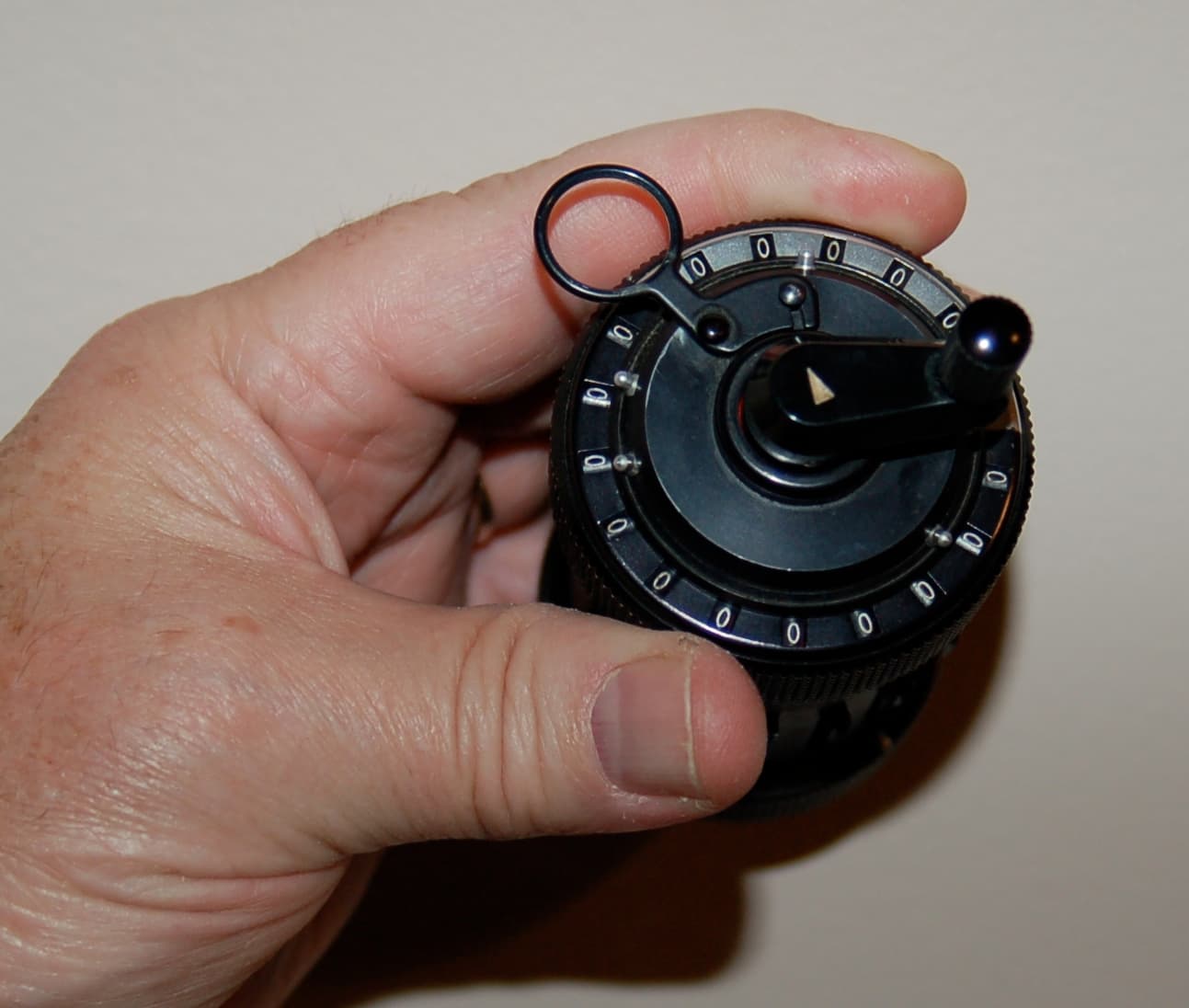
Shift the carriage to move that addition one decimal place.
It is a hand-powered place-value engine.
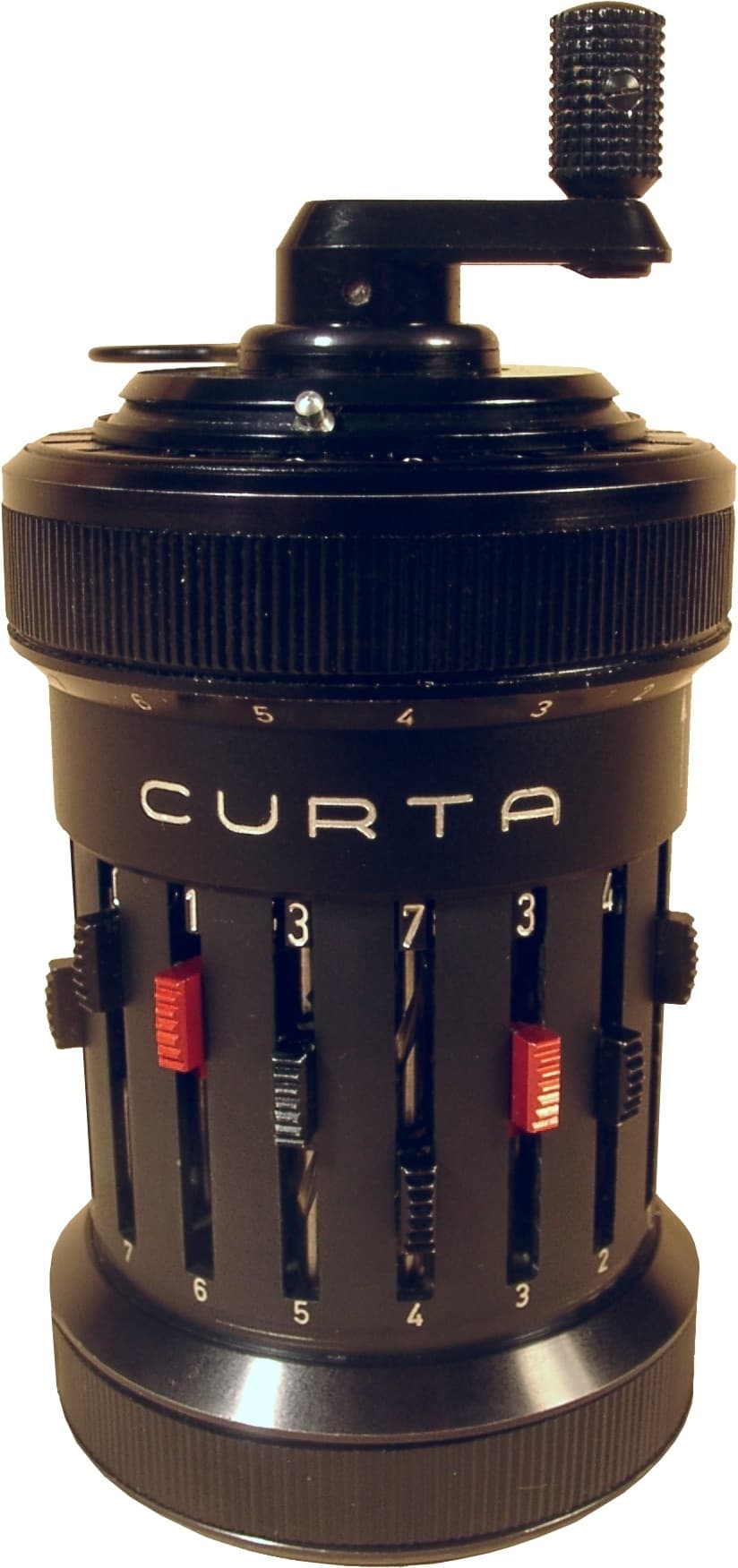
One crank turn
This is the essential Curta loop: set a value, rotate the crank, transmit motion through the drum stack, carry any overflow, then repeat or shift the carriage.
Hands-on demo
This mini model focuses on the three ideas that matter most for intuition: the slider value, the crank turn, and the carriage shift.
Pull farther down to expose more of each stepped drum.
Moving left means every crank lands one decimal place higher.
Load a classic pattern, then crank through it yourself.
Crank three times at the 1s position, shift left once, then crank twice. The turns register will read 23 and the result will land on 3772.
Simplified teaching model: the real Curta packs many more digits and a much denser gear train into the same cylindrical idea.
Exploded anatomy
A Curta feels mysterious because everything is nested into one compact tower. Exploding the layers makes the machine readable.
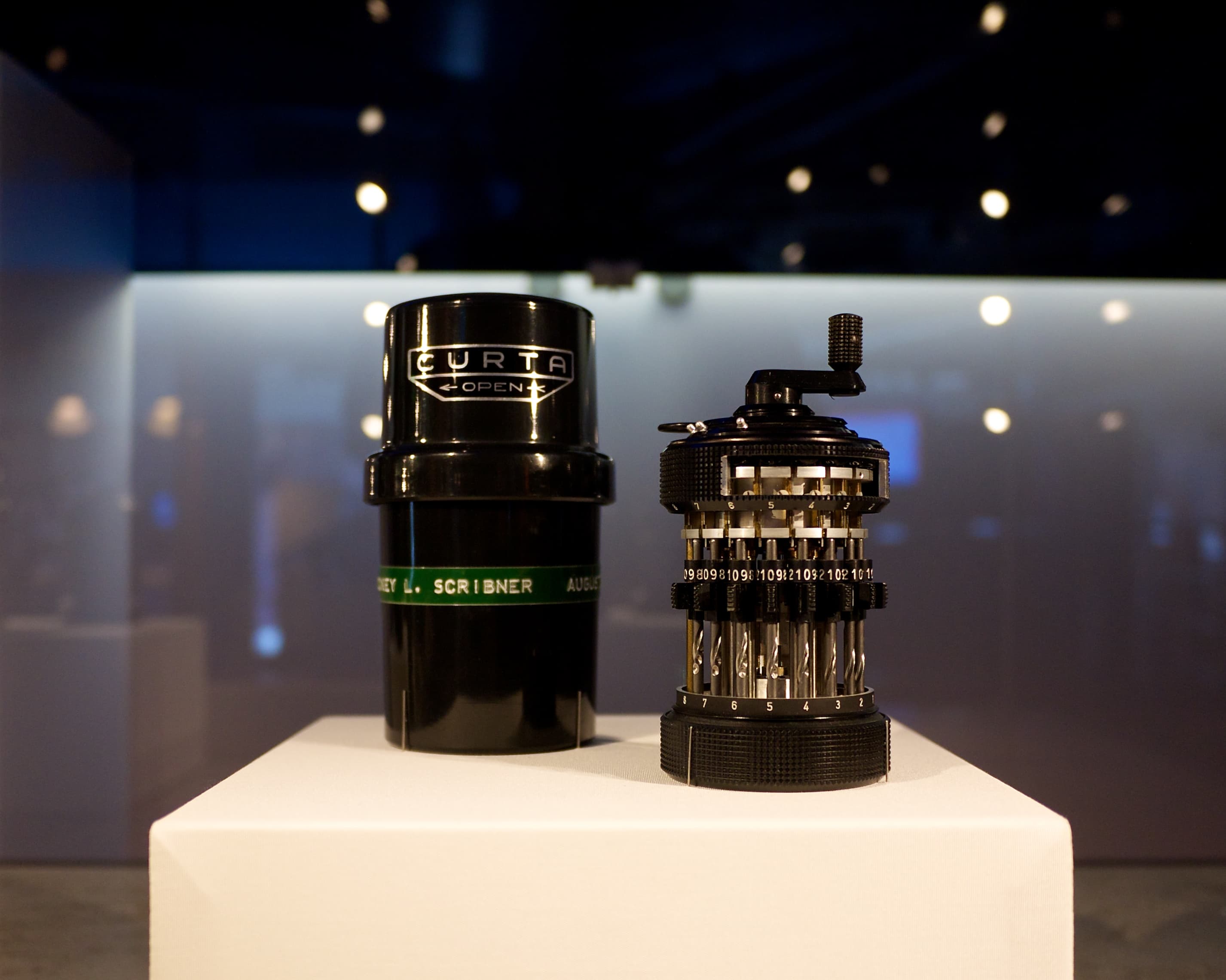
Mental model
On a Curta, a number is not stored as an electronic state or even a visible gear ratio first. It begins as a physical travel distance chosen by each slider.
One full crank turn executes one clean addition or subtraction cycle. Multiplication emerges from doing that same cycle multiple times.
The carriage rotation is the key visual trick: the machine does not learn multiplication separately, it just learns where the next addition should land.
Photo references: Curta Typ 1a by Mägi Beck, Curta Mechanical Calculator at CHM by Don DeBold, and Curta calculator by Larry McElhiney, via Wikimedia Commons.